
Orange County · Landscape planning
Orange County Landscaping: A Water-Wise Homeowner’s Guide
A thoughtful landscape should look good, fit the way you live and work with your yard’s conditions—not against them.
By Perez Tree Service & Landscaping
What makes a good Orange County landscape?
The best starting point is a site-specific plan: choose plants for your yard’s conditions, group them by water needs, fix irrigation and drainage problems, preserve useful shade and design outdoor areas you will actually use. Then set a maintenance routine that supports the design.
Whether you are updating a Newport Beach courtyard, an Irvine front yard or a hillside garden in Yorba Linda, that sequence helps you avoid buying plants or paving before the underlying issues are understood.
1. Start with your property—not just your city
Orange County is not one uniform growing environment. The UC Master Gardeners of Orange County recommend assessing sunlight, shade, wind, soil, drainage, slopes and moisture before choosing plants or setting irrigation. Even different sides of the same home can need different care. [1]
- Coastal properties: in Newport Coast, Corona del Mar or Laguna Beach, ask how wind exposure and any salt spray affect the exact planting location. A sheltered courtyard is different from an exposed garden.
- Inland gardens: in Irvine, North Tustin or Villa Park, map sunny and shaded areas separately. Reflected heat beside paving or walls may affect plant selection.
- Hillside and larger lots: in Shady Canyon, Coto de Caza or Yorba Linda, inspect slopes, runoff paths and access before deciding where planting, paths and irrigation should go.
These are assessment prompts, not assumptions about every home in those communities. Browse our Orange County service areas to find your location.
2. Choose water-wise plants that fit the site
Water-wise landscaping does not have to mean a bare gravel yard. MWDOC’s Orange County Water Smart Gardens resource offers climate-appropriate plant selections, garden ideas and lawn alternatives. Use it to build a shortlist, then check mature size, sun exposure and soil suitability before planting. [2]
Think in layers: trees for shade where appropriate, shrubs for structure, and smaller plants to soften edges. Leave room for each plant’s mature spread instead of relying on frequent trimming to keep an overcrowded bed manageable.
Keep lawn where it meets a real need, such as play or recreation. Elsewhere, explore planted beds or other suitable surfaces. Low-water plants still need water, especially during establishment; “drought-tolerant” is not the same as “no irrigation.” Discuss the planting and upkeep together when planning landscape design and installation.
3. Fix irrigation before adding more plants
A new planting plan cannot solve a broken sprinkler or a controller set for the wrong season. Irvine Ranch Water District advises matching irrigation to plant needs, soil and exposure, grouping similar water needs on the same valve, using appropriate efficient equipment and avoiding runoff onto hard surfaces. [3]
- Run each zone and look for leaks, blocked emitters, overspray and uneven coverage.
- Separate lawn and planting areas when their watering needs differ.
- Consider suitable drip irrigation for planted beds rather than watering nearby paving.
- Check soil moisture and adjust for season and weather; do not use one schedule all year.
- Check your own water provider’s current watering rules before setting the controller.
There is no universal “three days a week” answer for every Orange County yard. If plants look stressed despite regular watering, request an irrigation assessment rather than automatically increasing run time.
4. Make outdoor living part of the landscape plan
Start with how you want to use the space: dining, quiet seating, play, entertaining or simply a welcoming entrance. Then plan paths and furniture clearance, shade, planting and irrigation around those uses.
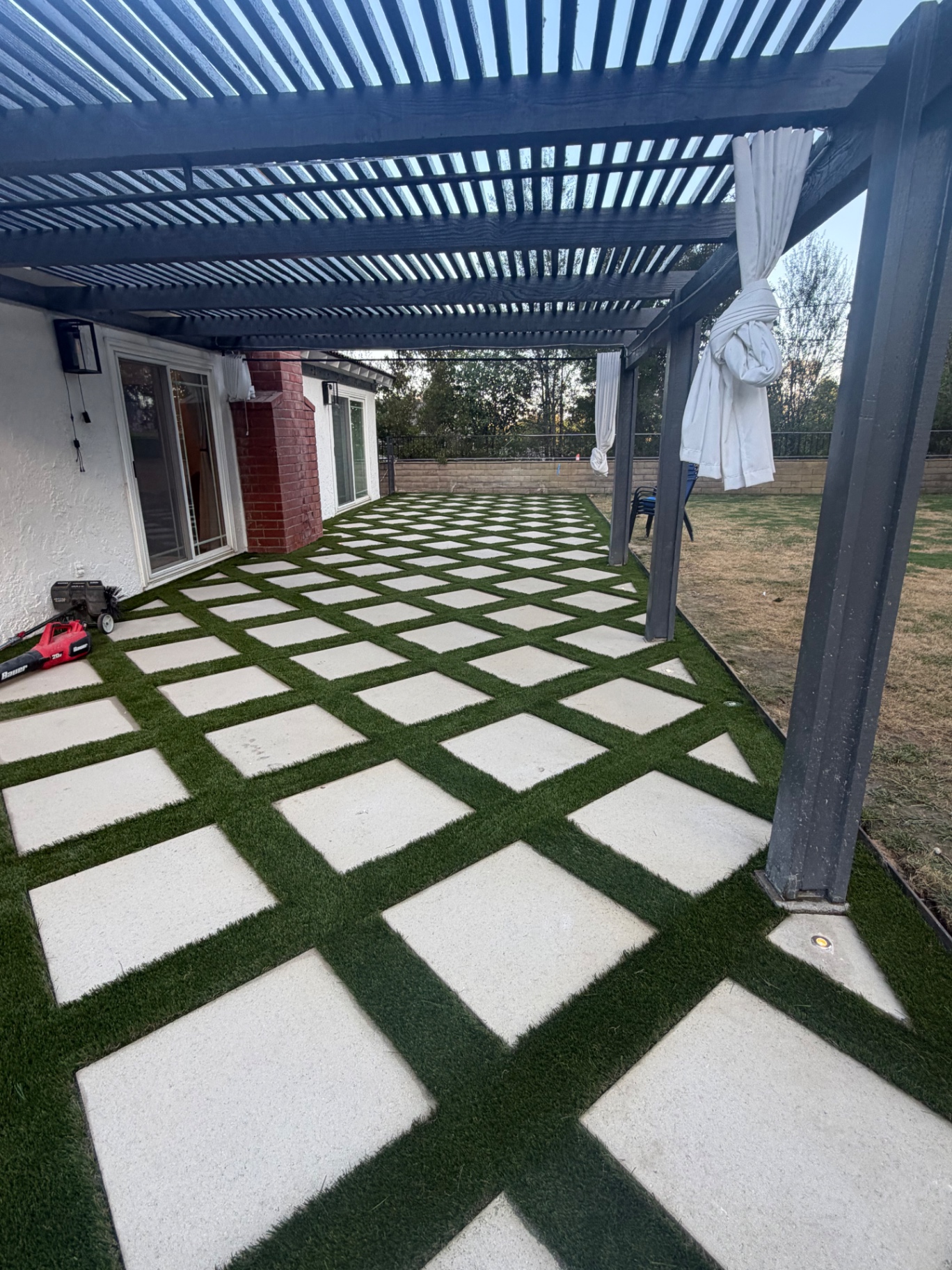
Our landscaping project gallery includes paver-and-turf courtyards, a pergola-covered patio, succulent planters and a decomposed-granite walkway. These are useful design references, not a promise that every material suits every property. For example, a surface that works for a level courtyard may not be the right choice for a sloping path.
Discuss drainage before installing paving. Confirm any applicable HOA design approval, city requirements or tree protections before work begins. Rules vary by property and scope; do not assume a neighbor’s approved project gives yours automatic approval.
5. Coordinate tree trimming, gardening and lawn care
Existing trees are part of the design, not obstacles to plan around at the last minute. Before major changes, ask how construction access, paving and new planting could affect roots and shade. Tree trimming should respond to the species, condition and purpose of the work rather than a one-size-fits-all calendar.
Large limbs, damaged trees and work near utilities need professional assessment. Avoid attempting hazardous cuts yourself. Discuss local protections and nesting wildlife before scheduling work. Our tree trimming service can be part of a broader property-care conversation.
For ongoing gardening and lawn maintenance, define what each visit includes: mowing, bed care, seasonal pruning, cleanup and irrigation checks. A clear scope helps keep the original design looking intentional rather than allowing every plant to be cut to the same shape.
6. Prepare for a useful landscaping estimate
If you are searching for an Orange County landscaper, compare plans for the same work—not just the bottom-line price. A maintenance visit, an irrigation repair and a full landscape installation are different services and should not be priced as if they were interchangeable.
Before a site visit, gather:
- Your priorities, budget range and preferred timing.
- Photos of problem areas and a few design references.
- Any HOA documents or known approval requirements.
- Information about access, drainage issues and the existing irrigation controller.
- A list of plants or trees you want to preserve.
Ask what is included in preparation, materials, installation, cleanup and ongoing maintenance. Confirm relevant credentials and insurance directly with any provider. This guide does not substitute for a site assessment or establish a fixed project price.
Perez Tree Service & Landscaping offers tree trimming, landscaping, gardening and lawn care, and irrigation services across Orange County. Call 714.932.1527 or message us on WhatsApp for a free estimate.